
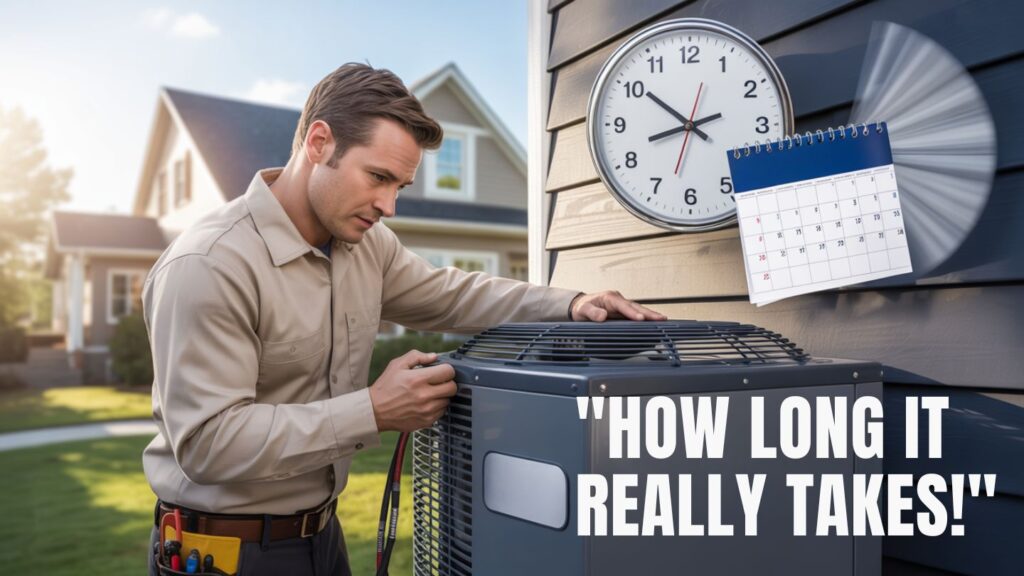
How long does HVAC system installation take? Usually, installations are completed within 1 to 3 days. Factors like your home’s size and the complexity of the system can affect this timeline. This post will walk you through what to expect.
Key Takeaways
- HVAC system installations typically take 1 to 3 days, but can extend to 5 days for complex setups involving extensive ductwork or multiple units.
- Factors influencing installation time include the size and layout of the home, the type of HVAC unit, and the complexity of installation, such as ductwork and electrical upgrades.
- Hiring experienced technicians is crucial for a timely and efficient installation, as they adhere to safety regulations and best practices, reducing the risk of costly mistakes.
Average Time for HVAC System Installation
Getting an HVAC system installed usually takes between 1 to 3 days. This timeframe covers most standard installations where the setup is relatively straightforward. However, if your hvac installation times involve more complex requirements, such as extensive ductwork or multiple units, you might be looking at a timeline extending up to 5 days.
Replacing an air conditioner can often be completed in less than a day. Although the average AC installation time is a few days, various factors can cause variations. Several elements influence these timeframes.
Factors That Influence Installation Time
The timeline for HVAC installation varies and can vary depending on factors such as the size of your home, the type of HVAC unit, and the complexity of the installation, which can either speed up or slow down the process.
Knowing these several factors allows for a more accurate estimate from your HVAC company and better planning. Here’s a breakdown of how a few different factors affect your installation time.
Size of Your Home
The size of your home significantly influences how long it will take to complete an HVAC installation. Larger homes generally require more time because they often need bigger or multiple units to cool or heat the entire space. For example, if your home has high ceilings or several rooms, the installation might be more complicated and take longer.
Besides size, the layout of your home also affects how installation affects the installation duration. Hard-to-reach areas like an attic or a basement can slow down the process, requiring more time for installation based on the location. A complex layout generally means a longer installation time for bigger installations.
Lastly, larger homes might require multiple air conditioning units to ensure efficient cooling. This need for more units naturally extends the installation time. Understanding how your home’s size and layout affect the process helps you better anticipate the timeline and prepare.
Type of HVAC Unit
The type of HVAC unit you choose also plays a crucial role in determining the installation time. Central HVAC systems take longer to install than mini-split systems due to the need for more extensive ductwork and connections.
Mini-split systems are usually quicker to install, but can still take time if they involve multiple zones, requiring careful planning and installation. Knowing these differences helps you decide which mini split system suits your home and what installation timeline to expect.
Replacing an existing unit usually takes less time since the necessary ductwork and electrical connections are already in place. Installing a completely new system replacement requires more time due to the additional work to replace two units of new infrastructure that replace the old setup.
Complexity of Installation
The complexity of the installation is another significant factor that can impact the timeline. Installing new ductwork, for example, can add several hours or even days to the process. Larger homes often require more extensive ductwork, which contributes to how long it takes for longer installation durations.
In addition to ductwork, other complexities like electrical upgrades can also extend the installation time. If your home requires significant electrical work to accommodate the new HVAC system, this will add to the overall timeline. It’s worth noting that complex installations often need more than one HVAC unit, further extending the process.
Inspecting the existing ductwork ensures compatibility with the new HVAC system, preventing potential issues and delays. These factors determine the importance of understanding the complexity of your specific installation scenario within the current system.
The Role of Technicians in HVAC Installation
Hiring qualified technicians can significantly speed up the installation process and ensure the job is done correctly. Experienced technicians take to install safety regulations and best practices, reducing risks during installation. If you want to hire qualified professionals, it can enhance the overall efficiency.
Inexperienced technicians can make costly mistakes and prolong the installation. Improper installation can reduce the HVAC system’s efficiency by up to 30%. Therefore, hiring skilled professionals is essential for an efficient and correct installation.
Qualified technicians focus entirely on the installation process, maintaining the highest quality standards. Investing in skilled professionals ensures a smoother and quicker installation.
Preparing Your Home for HVAC Installation
Preparing your home for HVAC installation can significantly improve the efficiency and speed of the heating process. Ensure all work areas are free of clutter and well-lit. Clearing landscaping or outdoor furniture in the installation area also helps.
Turn off all gas and electricity to the installation area to prevent accidents. Make sure hard-to-reach areas are accessible to avoid delays.
Being present during installation helps facilitate access to various parts of the home, enabling technicians to work more efficiently. These preparatory steps ensure a smoother and faster HVAC installation.
Steps in the HVAC Installation Process

The HVAC installation process involves several critical steps to ensure your new system is set up correctly. Ensure all necessary permits and paperwork are in order before installation day. Reviewing the installation plans with the technician beforehand helps clarify concerns and ensures everyone is on the same page.
Connecting the line set, especially for split system installations, is crucial for the refrigeration cycle and must be done correctly to ensure efficient operation. Experienced technicians can prevent costly mistakes leading to system component failure.
The installation process concludes with thorough testing and adjustments to ensure everything works correctly with the furnace. This final step guarantees optimal performance and efficiency of your new HVAC system, providing peace of mind.
How to Minimize Disruptions During Installation
Minimizing disruptions during HVAC installation helps maintain your daily routine. Schedule the installation for a less occupied time and inform your neighbors in advance to manage their expectations regarding noise and activity.
Clear pathways and work areas to facilitate easy access for the technicians, reducing the likelihood of accidents. Designate an area for the installation team to set up tools and equipment to avoid clutter and make the process more efficient.
Safety should always be a priority, especially when dealing with gas and electrical wiring issues. Contingency plans for unexpected issues help alleviate stress and ensure a smoother installation experience.
Final Thoughts on HVAC Installation
Overall, the time required for HVAC installation depends on factors such as home size, system type, and installation complexity. By hiring experienced professionals and preparing your home, you can ensure a more efficient and hassle-free process. Planning and understanding these variables will help you get your HVAC system up and running smoothly, saving time and effort in the long term.
At Stud Service Company, we specialize in providing reliable solutions tailored to meet your needs, including services of HVAC in Chesapeake. Our team takes pride in delivering high-quality results and ensuring your comfort. Ready to upgrade or install your HVAC system? Let us help make the process seamless and stress-free for you.
Frequently Asked Questions
How long does it typically take to install an HVAC system?
Typically, installing an HVAC system takes between 1 to 3 days, although more complex installations may extend up to 5 days.
How does the size of my home affect HVAC installation time?
The size of your home significantly affects HVAC installation time, as larger homes necessitate the installation of bigger or multiple units and more extensive ductwork. Consequently, this can extend the overall installation process.
What type of HVAC unit takes the longest to install?
Central HVAC units take the longest to install due to their complexity and the extensive ductwork required.
How can I prepare my home for HVAC installation?
To effectively prepare your home for HVAC installation, ensure all work areas are free of clutter, turn off gas and electricity to the installation area, and be present to assist the technicians as needed. This will facilitate a smooth installation process.
What should I look for when hiring an HVAC technician?
When hiring an HVAC technician, prioritize their qualifications and experience, ensuring they adhere to safety regulations and best practices. This will guarantee a smooth and efficient installation process.