
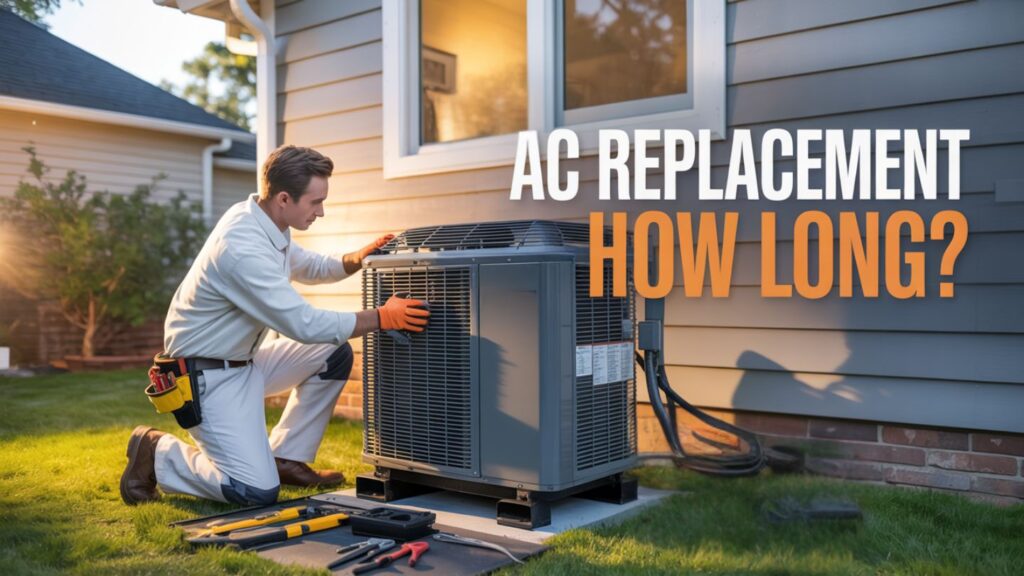
Replacing an AC unit is a significant task that requires proper planning and understanding of the process. If you’re considering upgrading your air conditioning system, you might be wondering how long the replacement will take and what factors can impact the timeline. Typically, an AC replacement can be completed within a single day, but several variables can influence the duration. In this blog, we’ll walk you through the key factors that determine how long it takes to replace an AC unit and provide insights into what you can expect during the process. Whether you’re preparing for a new installation or replacing an old system, this guide will help you stay informed.
Key Takeaways
- AC unit replacement typically takes 4 to 8 hours, depending on various factors such as type, size, and accessibility.
- Installation complexity varies by system type: ductless units take 1-3 hours, while packaged systems require 4-6 hours.
- A full system replacement, which involves replacing all HVAC components, including ductwork and wiring, is a more extensive process and can take several days to complete.
- Ensuring the system is installed correctly is crucial for efficiency and reliability.
- Hiring qualified HVAC technicians ensures professional installation, compliance with safety standards, and can prevent future costly errors.
Time Required to Replace an AC Unit
Replacing an air conditioner typically takes between 4 and 8 hours, meaning you can expect the job to be completed in less than a day. This quick turnaround minimizes the time your home is without cooling, especially in peak summer months. If you’re wondering how long it takes, rest assured, it will be done efficiently.
Replacing an existing air conditioner is usually faster than a full system replacement, which may require additional steps such as replacing ductwork or wiring. System replacement timelines can also vary depending on whether you have central air conditioners, split air conditioners, or window units, as each type involves different installation processes and components.
The time required to replace an air conditioner can vary depending on several factors. Being aware of these variables helps in better preparation and setting realistic expectations.
Factors Influencing Replacement Duration
Factors such as the type of air conditioning system, size of the unit, and accessibility of the installation site can influence the replacement duration. Each factor can either shorten or lengthen the installation time based on specific circumstances.
Weather conditions, permits, and inspections can also extend the replacement timeline. For instance, central air conditioning systems usually take longer to install due to more extensive ductwork. A central air system or central air systems often require additional time because of their comprehensive design, integration with ductwork, and the need to replace components like compressors and coils.
Adherence to local building codes is essential during the replacement process and can also impact the overall timeline.
Let’s dive deeper into each of these factors to understand their impact on the replacement duration.
Type of Air Conditioning System
The type of air conditioning system significantly impacts installation time. There are several types, including split air conditioners, packaged air conditioners, mini-split systems, portable air conditioners, and window units, each with unique complexities and installation requirements.
A split air conditioner consists of two separate units: an indoor unit (which houses the evaporator coil and air handler) and an outdoor condensing unit. These two units are connected by copper tubing that carries refrigerant between them. Split air conditioners and packaged air conditioners contain the same components, such as the compressor, evaporator coil, and condensing unit, but are arranged differently. In a packaged air conditioner, the condensing unit and evaporative coil are combined into one compact unit, often installed on the roof or in limited spaces.
For instance, replacing a ductless mini split AC system generally takes 1 to 3 hours, while installing a packaged air conditioning system usually requires a few hours, typically 4 to 6 hours. Some installations may involve multiple units or two units, which can increase installation time, especially when coordinating several indoor units with one or more outdoor units. Window units, being self-contained, are typically quicker and easier to replace.
Additionally, a full system replacement may involve other equipment, such as thermostats, ductwork, or additional AC units, which can further affect the overall installation time. These differences arise from the varying complexity and number of units involved, including mini split systems.
Size of the AC Unit
The size of the AC unit also impacts installation time. Larger units require more time due to their complexity and the need for additional components, equipment, and labor.
Smaller units, in contrast, are quicker to install as they involve fewer components and less labor. If you’re replacing a larger air conditioner, be prepared for a longer installation process to ensure everything is done correctly.
Installation Site Accessibility
The accessibility of the installation site can significantly affect replacement duration:
- Easily accessible spots shorten the process.
- Difficult site access, such as roof installations, can extend the time required.
- Obstructions or site layout can hinder access, prolonging the installation.
The ease or difficulty of accessing the installation site is a crucial factor influencing how long it takes to replace.
Steps Involved in Replacing an AC Unit
Replacing an AC unit involves the following stages:
- Removing the old unit
- Preparing the site for the outdoor unit
- Installing the new AC unit
- Conducting final tests and checks
- Ensuring the proper functioning of the AC units
- Completing the AC installation
- Having the AC installed
The steps may differ if you are doing a full HVAC replacement or installing a new HVAC system, as these processes can be more extensive and involve additional considerations.
One of the key functions of an HVAC system is to remove warm air from your home and replace it with cool air, ensuring comfort and efficiency.
Each step ensures the new system operates efficiently and safely.
The process begins with a thorough assessment and ends with rigorous testing to confirm everything is in working order.
Removing the Old Unit
Safety is paramount when removing the old air conditioning unit. Follow these steps to ensure safe removal:
- Wear appropriate protective gear.
- Turn off the power to the unit.
- Disconnect from the electrical supply.
- Disconnect the refrigerant lines.
This step involves detaching one unit from its connections and preparing it for disposal or recycling. Proper removal avoids hazards and makes way for the new installation.
Preparing the Installation Site
Preparing the installation site involves ensuring that the site is ready for the new unit. Modifications to existing ductwork may be necessary to ensure proper airflow and compatibility.
This step includes cleaning the site and making necessary adjustments to the ductwork or electrical systems to accommodate the new air conditioner installation, ensuring the flow of cool air.
Installing the New Unit
Installing the new air conditioning unit is a detailed process. Window air conditioners can be set up in as little as 1 to 2 hours due to their simpler setup. Floor-mounted units require more steps, such as sealing holes and ensuring proper positioning and leveling.
Start by listing some forbidden forms of the keyword “electrical wiring” according to Rule 5. Correct positioning of the new existing unit ensures optimal performance and efficiency. This step also involves making electrical connections and ensuring proper load calculation to avoid future issues with electrical wiring.
Testing and Final Checks
After installation, thorough tests are crucial. This includes checking refrigerant levels and inspecting for leaks to ensure efficient operation. Commissioning involves checking pressures and temperatures to confirm proper function.
A thorough inspection ensures the entire process is completed correctly and the new system meets all safety and efficiency standards.
Choosing the Right HVAC Technician

Choosing the right HVAC technician is vital for a successful AC replacement. A qualified technician ensures efficiency and compliance with guidelines, minimizing the time required and ensuring correct installation.
Professional replacements provide peace of mind, knowing the job meets local regulations and safety standards. Engaging professionals ensures the geothermal systems are accurately sized for the home, which is crucial for energy efficiency.
Benefits of Professional AC Replacement

Hiring professionals for AC replacement offers numerous benefits. Qualified HVAC technicians undergo rigorous training and certification, ensuring safety and expertise. They can prevent costly errors during installation by avoiding common pitfalls.
Many HVAC companies provide warranties on their work, offering extra protection against future issues. Employing experts ensures improved energy efficiency, leading to lower utility bills and a well-functioning HVAC unit and HVAC systems.
Timelines and Confidence for AC Replacement
Replacing an AC unit is a straightforward process that typically takes between one day and a few days, depending on the complexity of the installation and the specifics of your home. By planning ahead and working with experienced professionals, you can ensure minimal disruption and enjoy a more comfortable living space quickly.
If you’re in need of AC repair in Chesapeake or considering a full replacement, Stud Service Company is ready to support your needs. Our experienced team handles every step efficiently, so you can count on us for fast, reliable service that gets your home back to comfort in no time.
Frequently Asked Questions
What factors influence the time required to replace an AC unit?
The time required to replace an AC unit is influenced by the type of system, the size of the unit, and how accessible the installation site is. Understanding these factors can help manage expectations during the replacement process.
Why is it important to hire a professional HVAC technician?
It is important to hire a professional HVAC technician to guarantee proper installation, adherence to local codes, and enhanced energy efficiency. This not only ensures optimal system performance but also helps avoid costly repairs down the line.
What are the benefits of professional AC replacement?
Professional AC replacement offers the advantage of preventing costly mistakes, as well as providing a warranty on the work performed and ensuring the system operates at peak efficiency. This ultimately leads to long-term savings and improved comfort.
How often should I replace my AC unit?
Most AC units last between 10 and 15 years. However, factors like maintenance, usage, and environmental conditions can impact their lifespan. If your system is older or frequently breaks down, it may be time to consider a replacement.